
Brain Terrains
A hybrid inquiry into identity, scale,
and relational systems
2015 — ongoing
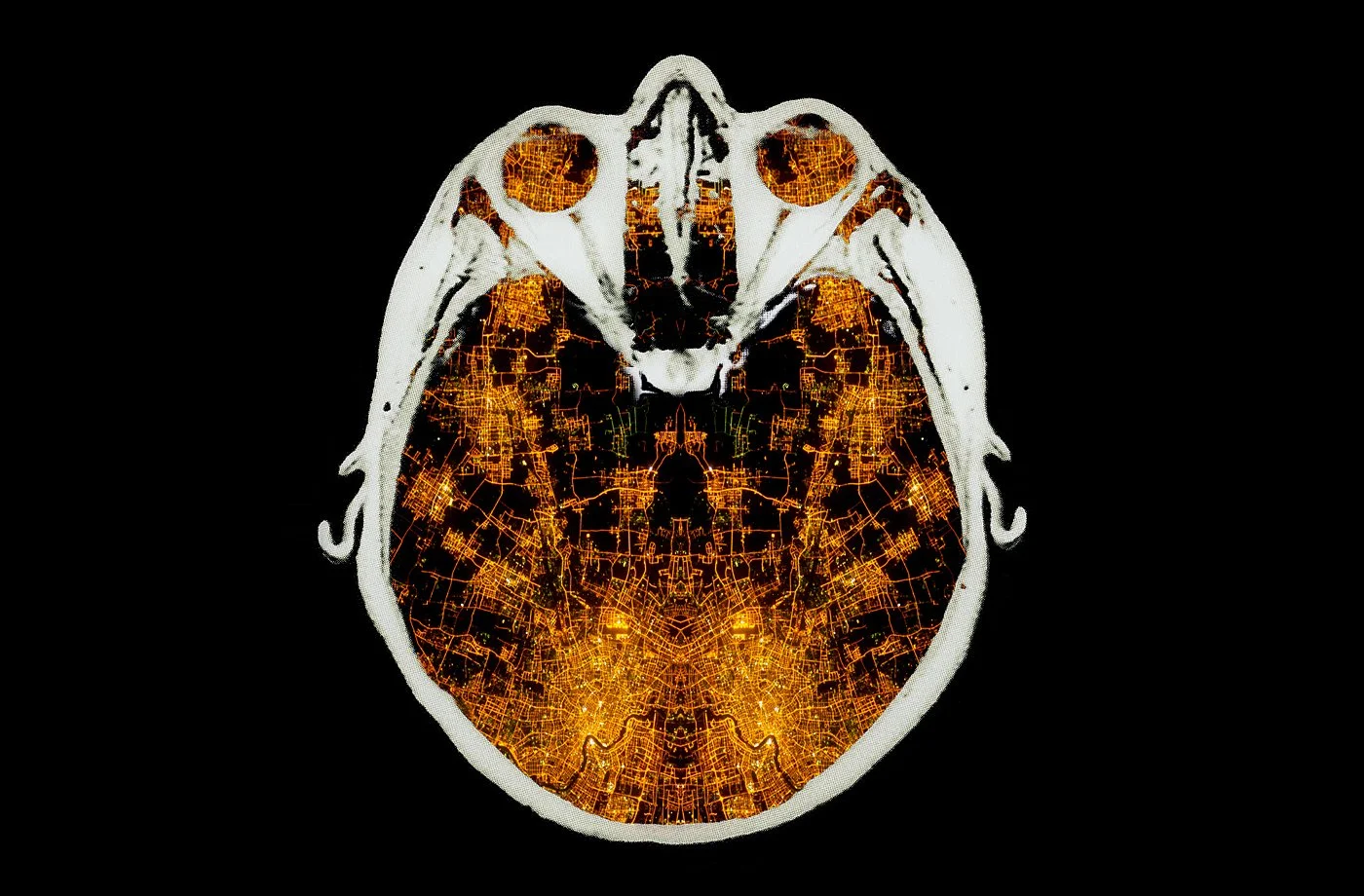
Shanghai at Night-2, CT-SCAN + NASA-EO image (Shanghai, Eastern China)
Overview
Brain Terrains is an ongoing artistic inquiry at the intersection of art, design, and systems thinking.
By recombining medical imaging—MRI, CT, X-ray—with satellite imagery, the work reveals a shared visual language across vastly different scales. These landscapes feel simultaneously intimate and planetary, personal and impersonal, inviting reflection on where the self begins and ends.
Brain Terrains positions these micro and macro scales as interconnected—part of a continuous field that includes biological, technological, ecological, and social systems. The work asks whether identity is better understood as a relational phenomenon, not as a bounded object, a concept shaped by forces that operate across scales: cellular, planetary, computational, and cultural.
“How do technologically mediated images reshape how we understand identity and place?
How do they inform our sense of self within a living fabric that is both too large and too small to perceive?”
Why This Inquiry Matters Now
We are living amid overlapping shifts: the proliferation of medical imaging, planetary sensing, and AI systems; the datafication of bodies and environments; and the emergence of non-biological intelligence.
These technologies extend perception beyond human scale, revealing worlds that were previously invisible or abstract. Brain Terrains sits with the human implications of this expansion.
What happens to identity when we recognize ourselves as embedded within systems we cannot directly perceive?
What if agency—individual and collective—is not fixed, but emergent within relational networks?
What does it mean if forms of non-human intelligence are already present and active within living systems on Earth?
Rather than offering answers, the work creates spaces for attentive inquiry, for slowing down, reframing perception, and expanding reference frames.
Method & Approach
The practice draws from a recurring set of materials and processes:
Medical imaging (MRI, CT, X-ray)
Satellite imagery and planetary data
Algorithmic and generative transformations
Photographic and moving-image material
Hand intervention, drawing, and compositional editing
The work emerges through remixing, juxtaposing, and reframing. Decisions balance visual clarity with metaphor, emotional resonance with ethical restraint, and meaning with deliberate ambiguity. A recurring fascination is scale and recursion, and the uncanny similarities that emerge when vastly different systems are viewed through a shared visual language.
Project Threads
Inner-Selfies @ The AGO

Participatory self-portraiture
and public engagement
Art Gallery of Ontario
A participatory exploration of identity that transforms audiences from viewers into co-authors, using the metaphor of a brain scan to question how we represent the self.
Deloitte Greenhouse
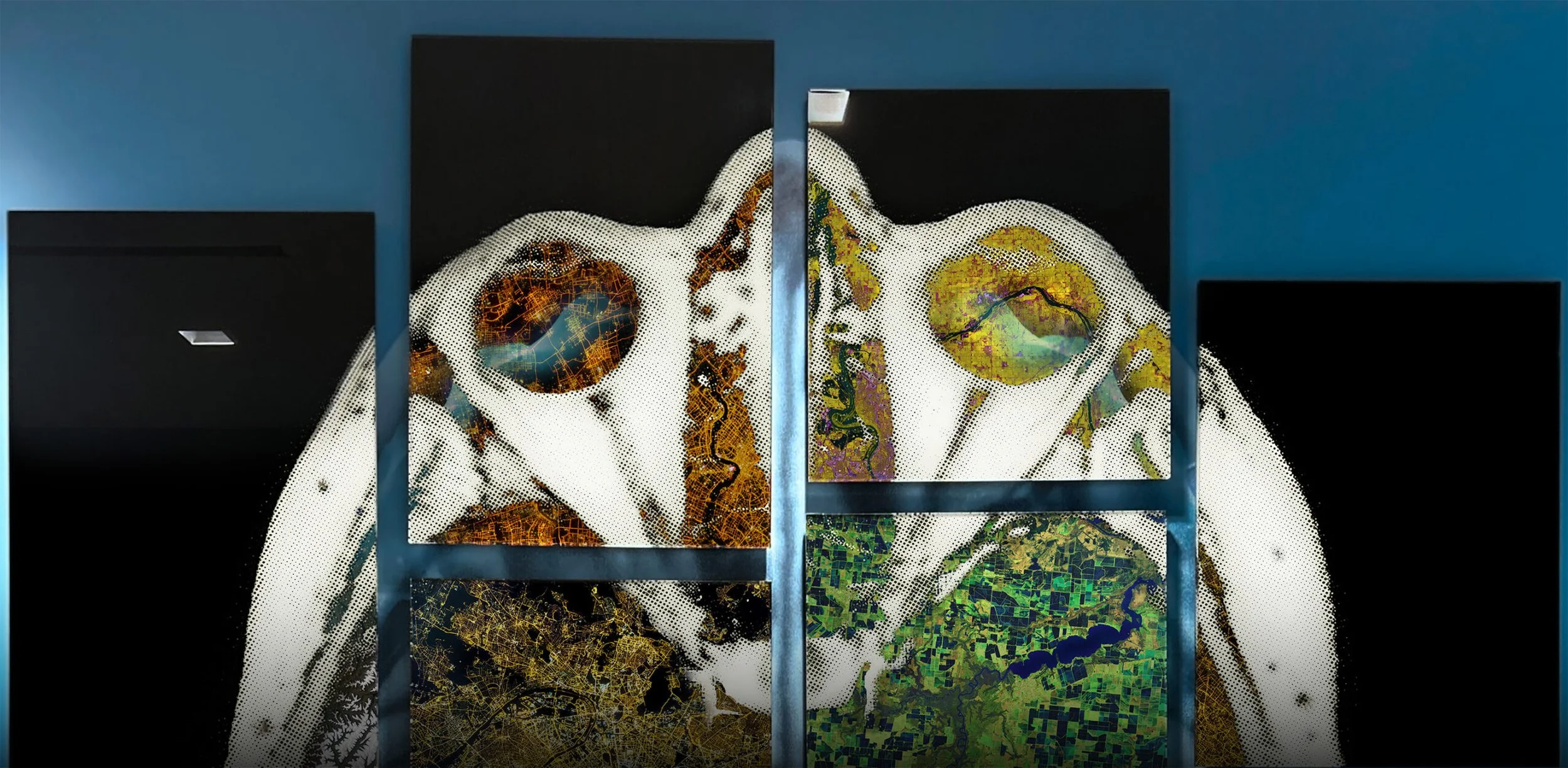
Experiential reframing in an innovation environment
Deloitte Greenhouse
A permanent installation designed to catalyze reframing and dialogue in strategic contexts, using inverted scales and subject–object shifts to disrupt habitual thinking.
Data Portraits
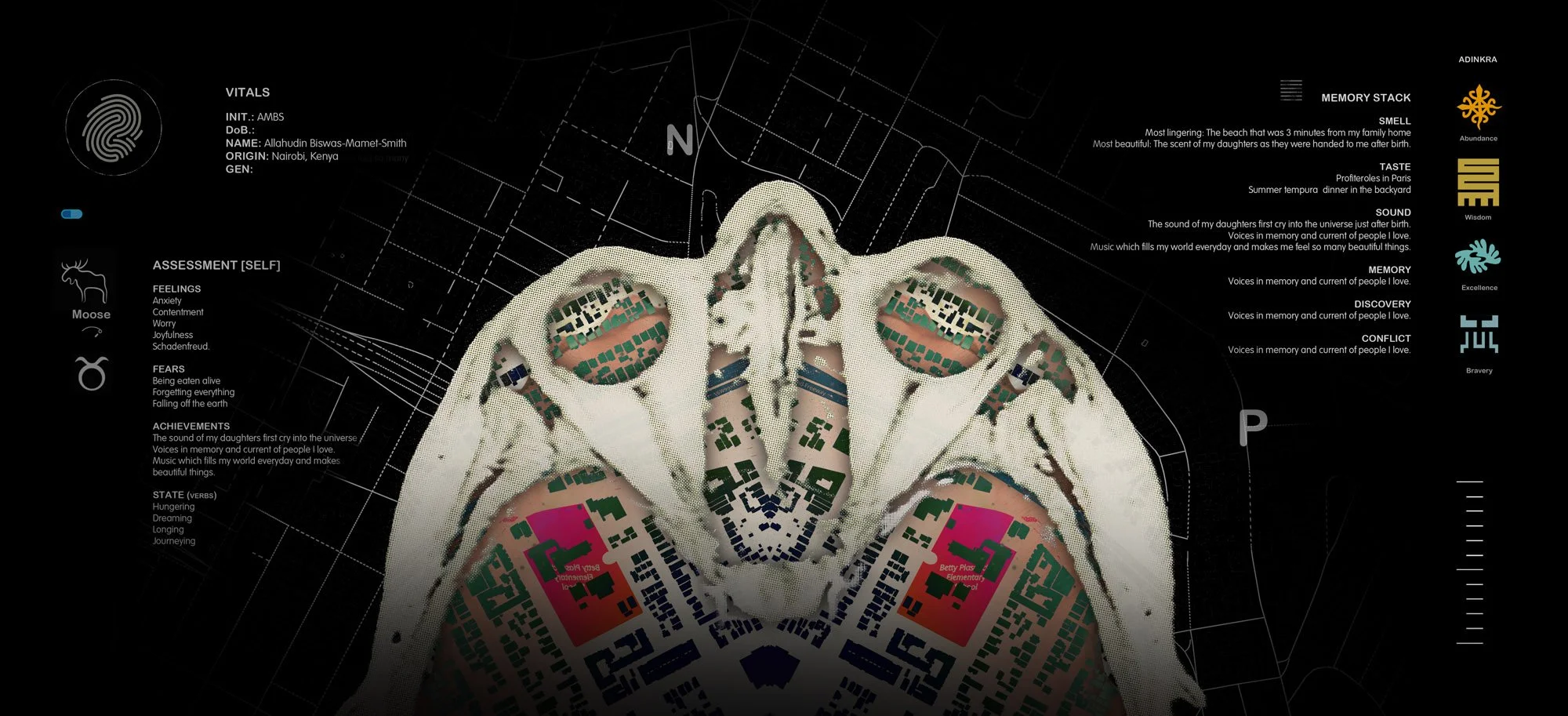
A generative platform for the creation of Data Portraits
(in development)
Data Portraits represent both a precursor to Inner-Selfies and a forward-looking extension of Brain Terrains. It is being developed as a standalone, web-based platform for public engagement.
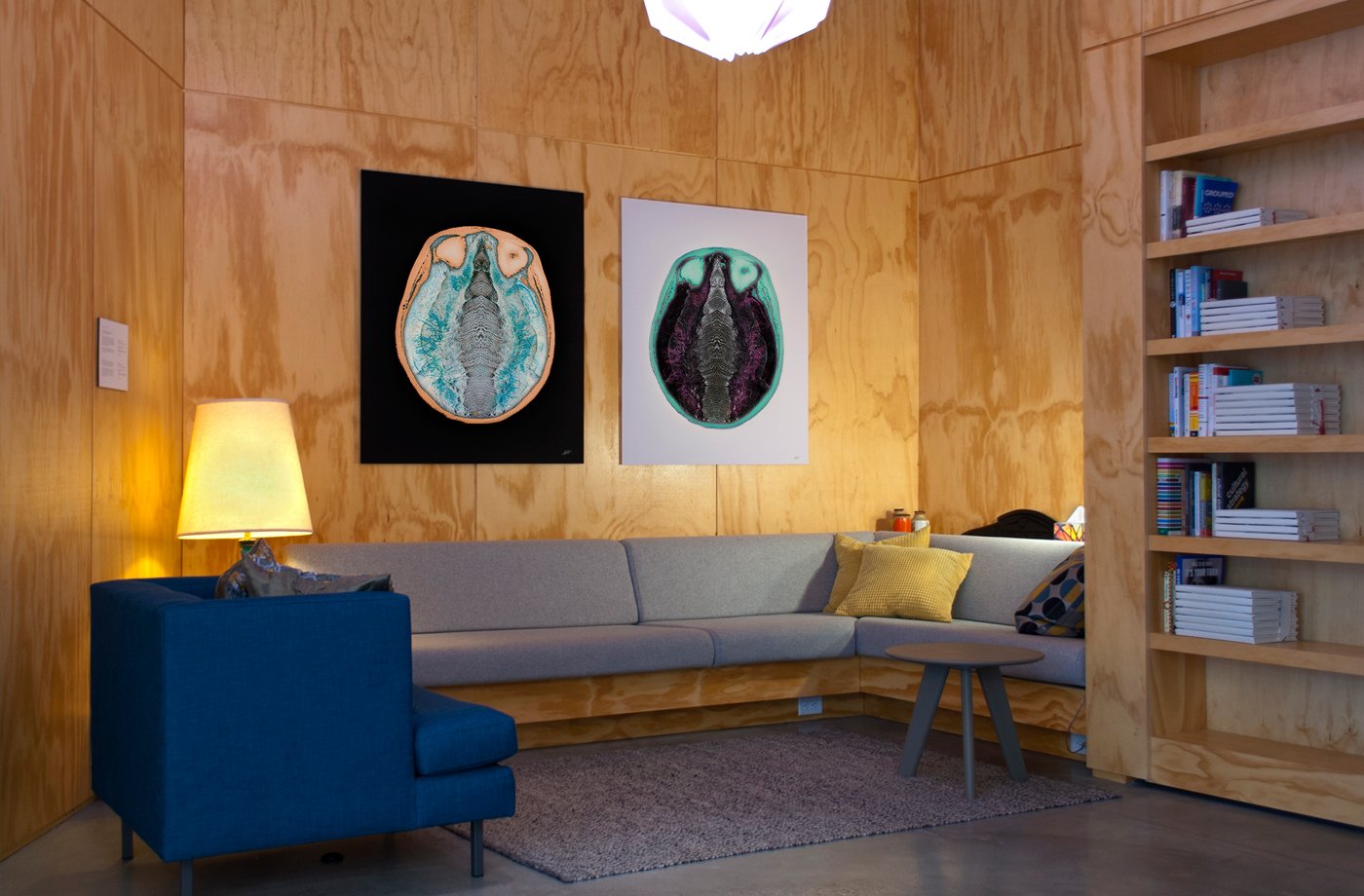
Bering Bearing -1 (Diptych). Installation photo, THNK School of Creative Leadership, Vancouver. CT-SCAN + NASA-EO images
Future Contexts & Trajectories
While originating as a personal artistic inquiry, Brain Terrains has evolved through galleries, public engagement, institutional research, and large-scale installations.
Looking forward, the work is intentionally positioned for continued development within:
Medical research institutions and neuroscience labs
Pharmaceutical and health-innovation environments
Cultural institutions exploring data, identity, and AI
Planetary data organizations and earth-observation platforms (e.g., satellite imaging and sensing)
What This Work Signals
Brain Terrains reflects a practice grounded in:
Systems thinking across scales
Translation between complex domains
Ethical engagement with data and technology
Designing spaces for reflection rather than prescription
It is artistic inquiry that translates across institutions, innovation environments, and collaborative contexts.
Closing
This is an ongoing trail, not a completed body of work. Brain Terrains continues to evolve through installation, research, and collaboration—particularly in contexts where identity, intelligence, medicine, and planetary systems intersect.