WDCH - Confluences
Walt Disney Concert Hall.
Systems legibility and navigation-in-context
Interactive media + publication
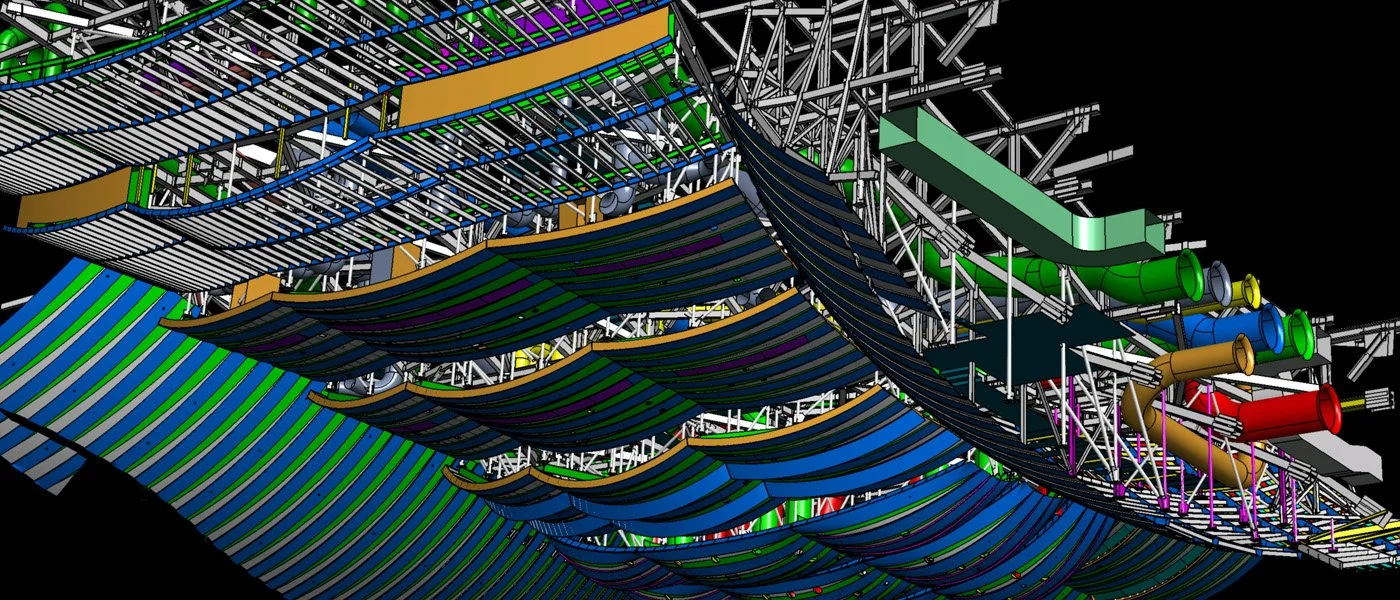
Shanghai at Night-2, CT-SCAN + NASA-EO image (Shanghai, Eastern China)
Overview
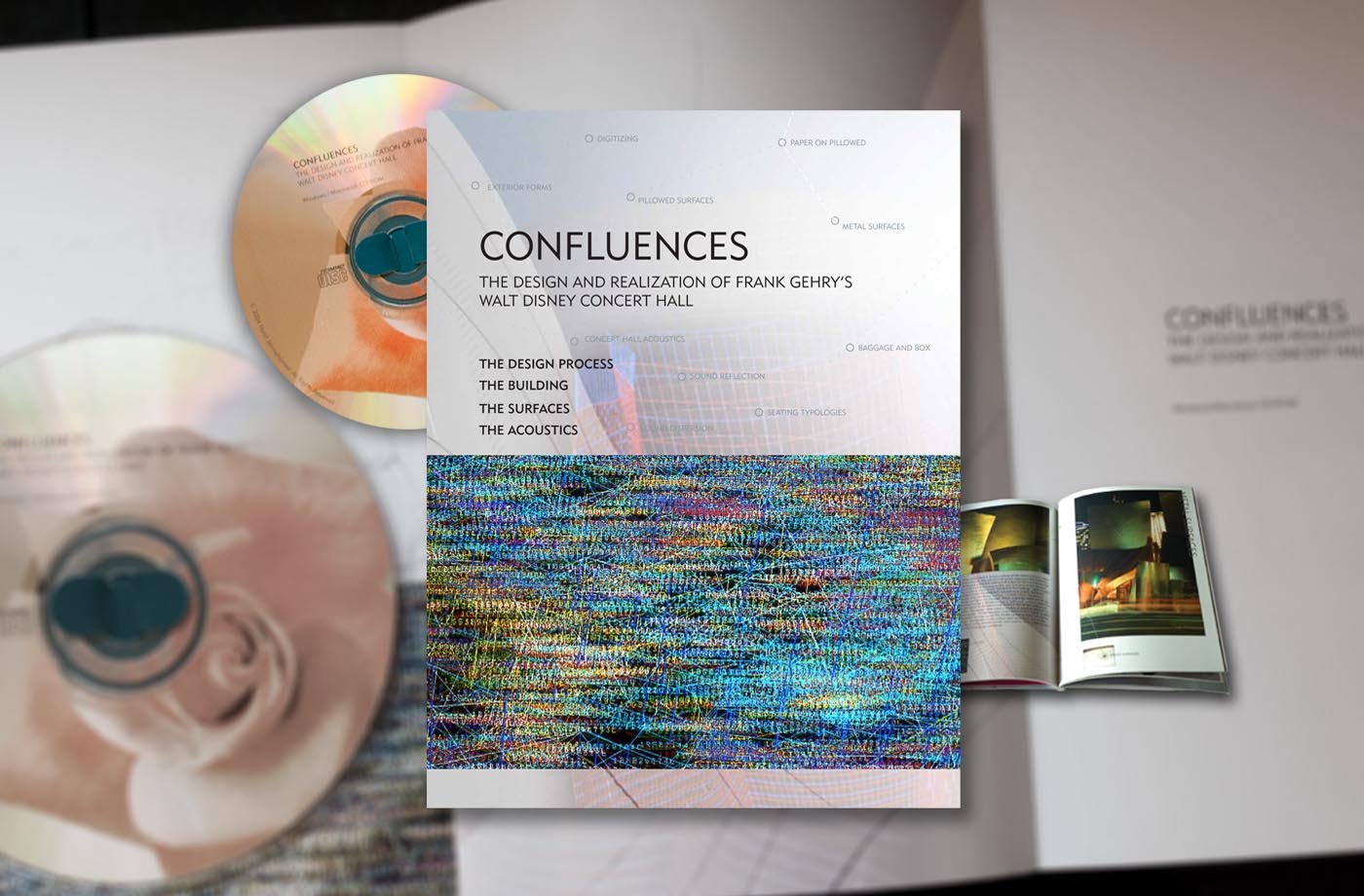
Confluences was an interactive and print-based project developed to illuminate the complex, interdependent systems behind the realization of the Walt Disney Concert Hall.
Rather than focusing on the building as an object, the project examined the relationships that shaped it over more than fifteen years: architectural design, acoustics, engineering, fabrication, construction technologies, and evolving digital workflows. The challenge was not representation, but legibility — how to make a dense web of interdependencies understandable without flattening its complexity.
“The challenge wasn’t to explain the building, but to make the relationships that shaped it legible.”
The Problem
The Walt Disney Concert Hall emerged during a major transformation in architectural practice. At the center of this shift was the introduction of the 3D model as a contractual artifact, collaboratively built yet architect-owned. This change rebalanced power within the AEC ecosystem and reasserted the architect’s role as master builder, in contrast to a previously circumscribed role, which Gehry described as the “infantilization” of the architect.
The problem was how to communicate this paradigm shift — not as a technical dissertation or linear, sequential story, but as a living system of interrelationships – a confluence.
The Conceptual Shift
We recognized that the Concert Hall could not be explained sequentially. Its logic was relational.
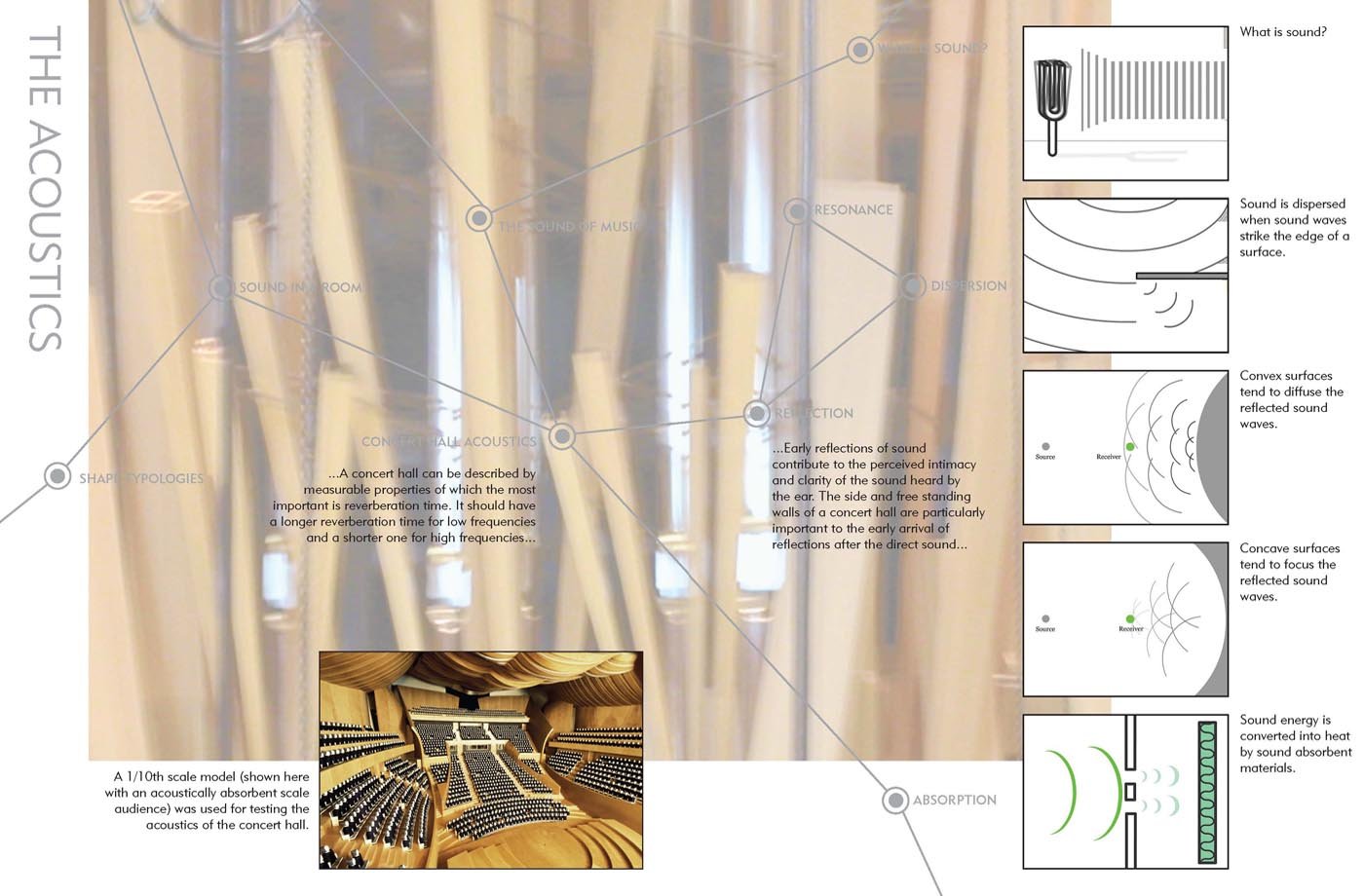
Drawing on earlier work in information architecture and research into “detail in context,” the project adopted a navigation-in-context approach: allowing users to explore specific elements while continuously perceiving their relationships to the whole.
The goal was orientation without simplification — enabling discovery while preserving systemic awareness.
How the System Took Shape
The interactive was structured around four interdependent domains:
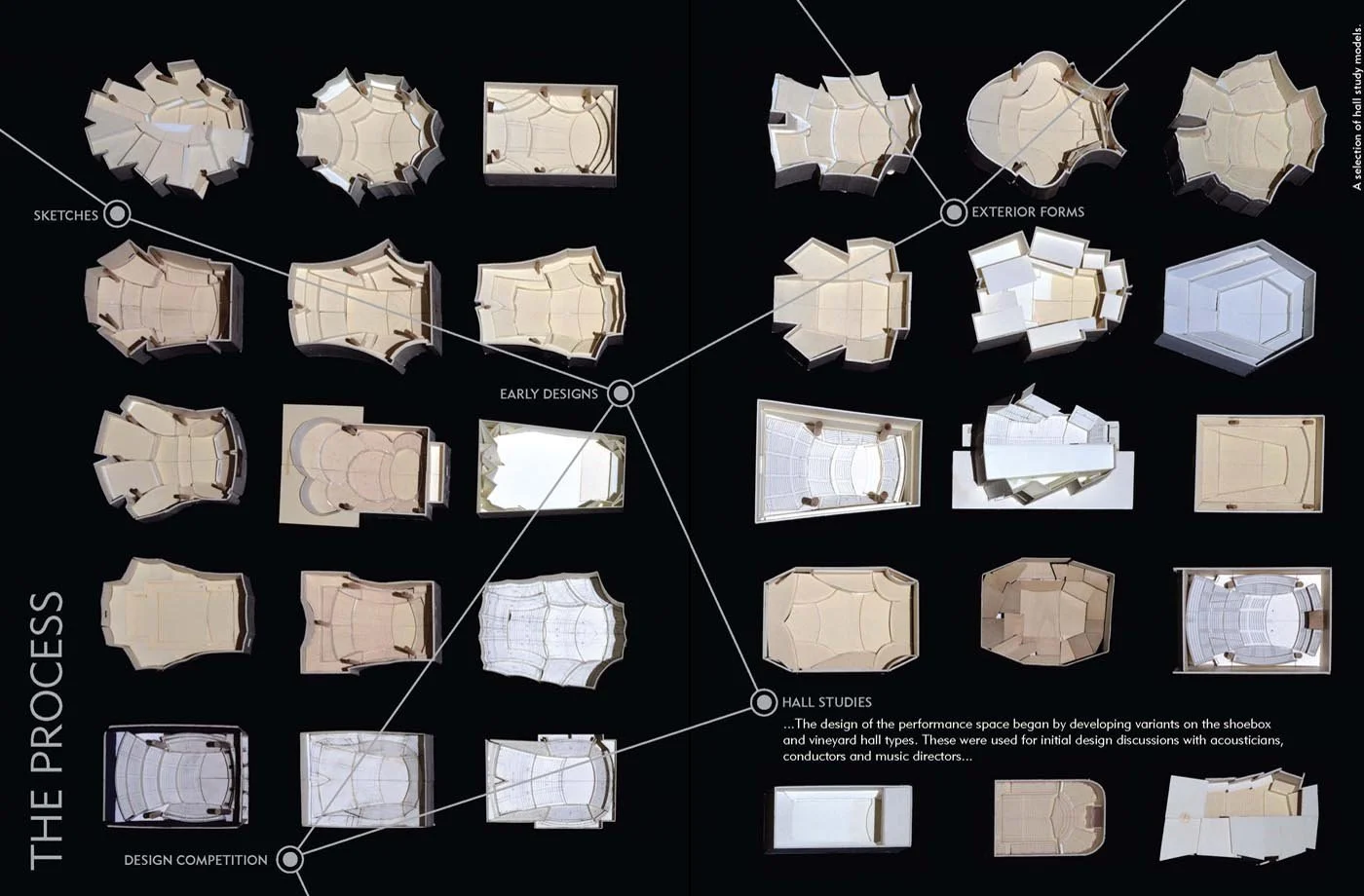
Architectural design process
Acoustics
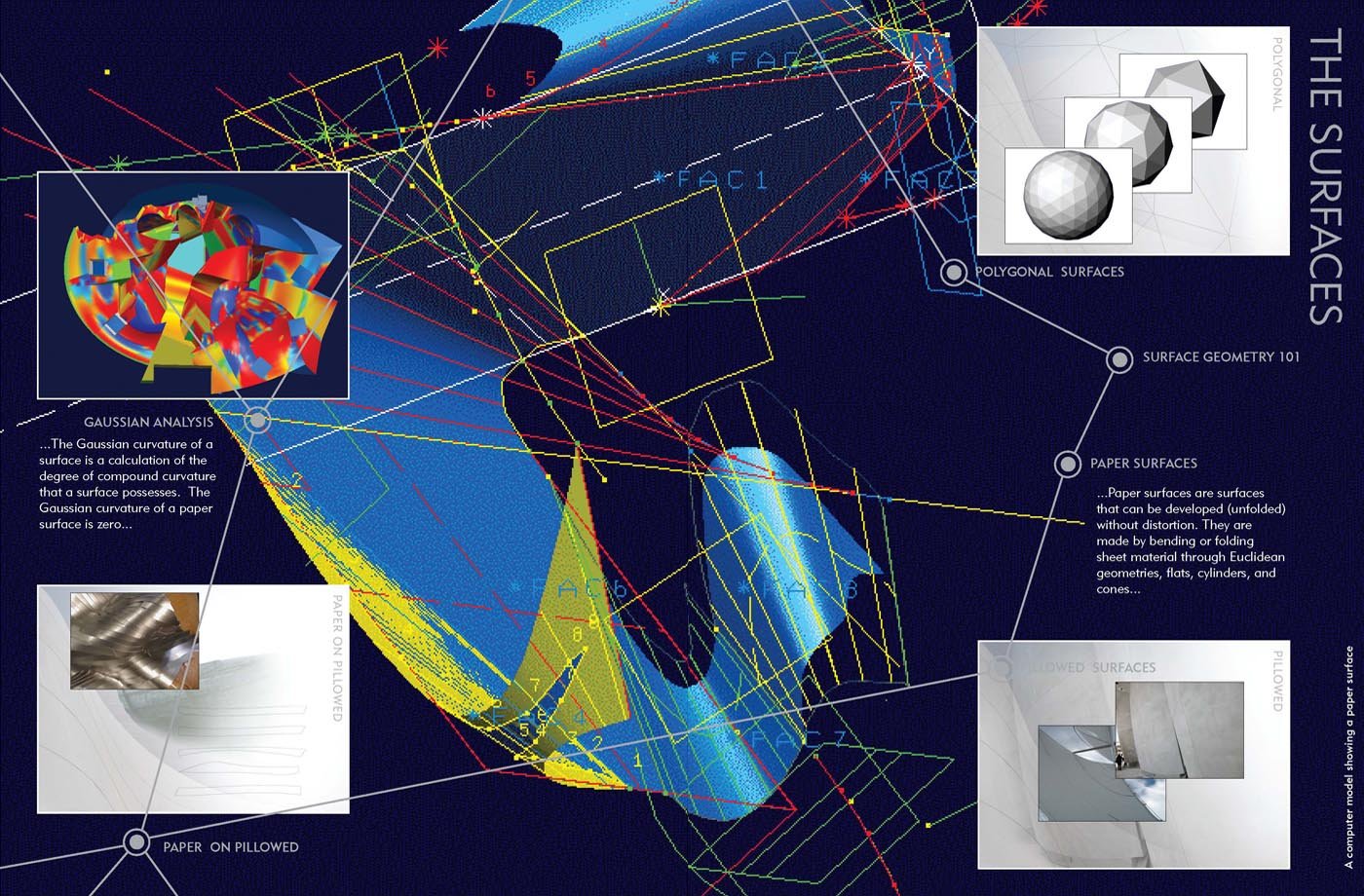
Engineering and fabrication
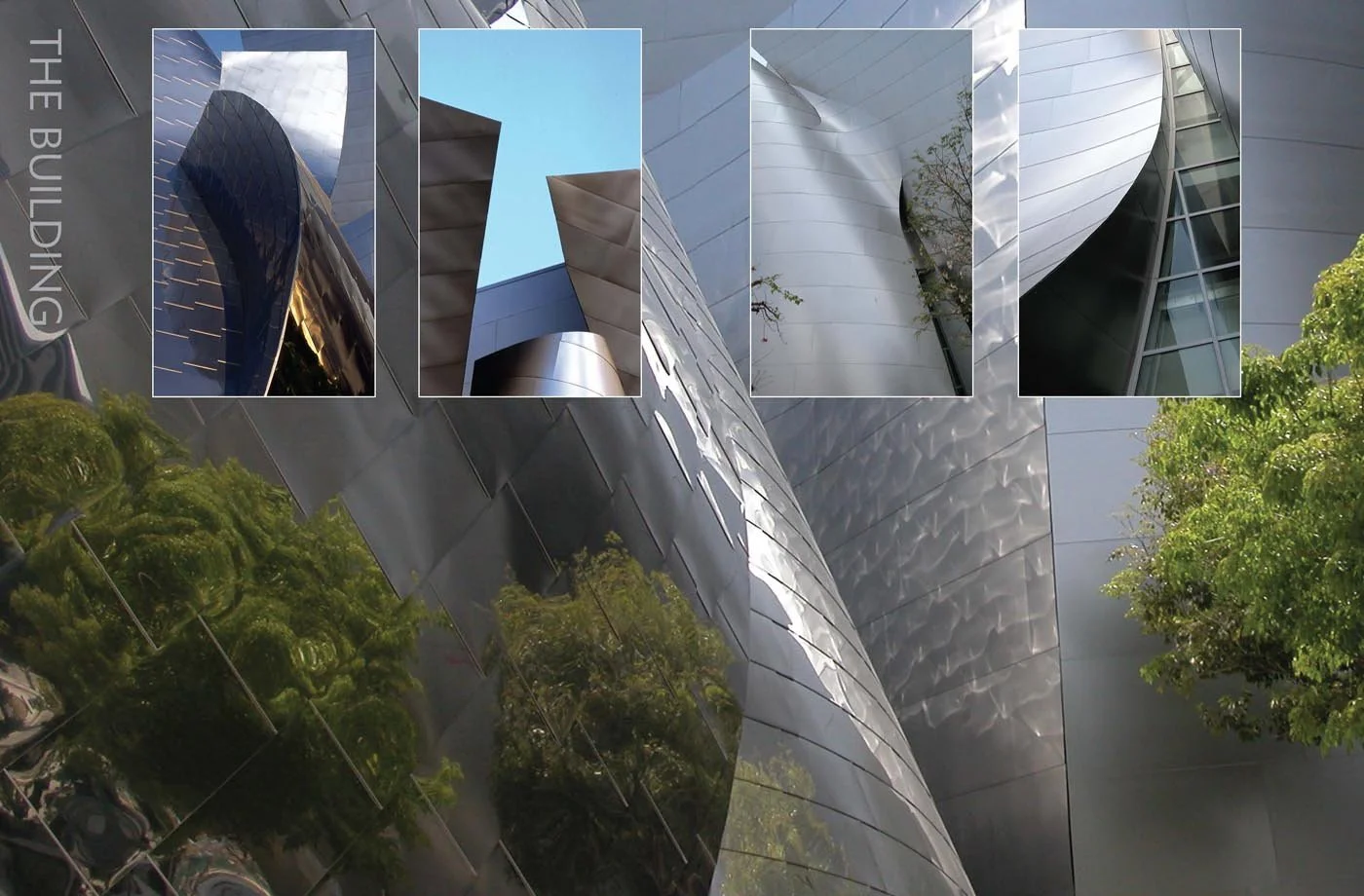
Building systems and realization
Users could move fluidly across these domains through two complementary modes:
Open exploration, guided by curiosity, using the navigation in context overlay
A systems map, revealing connections and dependencies between elements
These modes were fluid and user-driven. Interaction revealed structure and connections, allowing insight to accumulate through exploration rather than instruction.
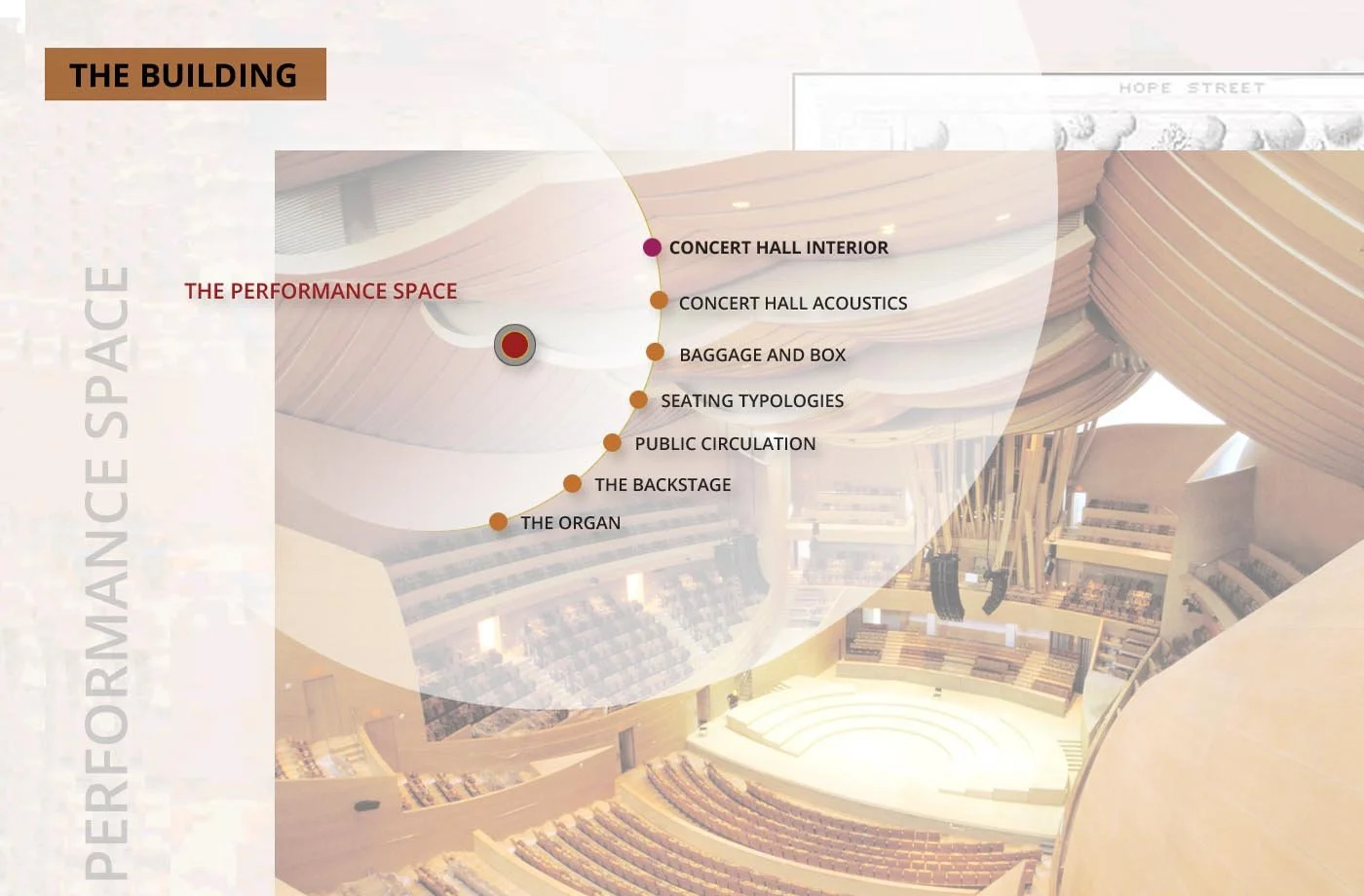
The Navigation layer was overlaid directly on the content layer, allowing viewers to stay oriented as they explored the navigation options.
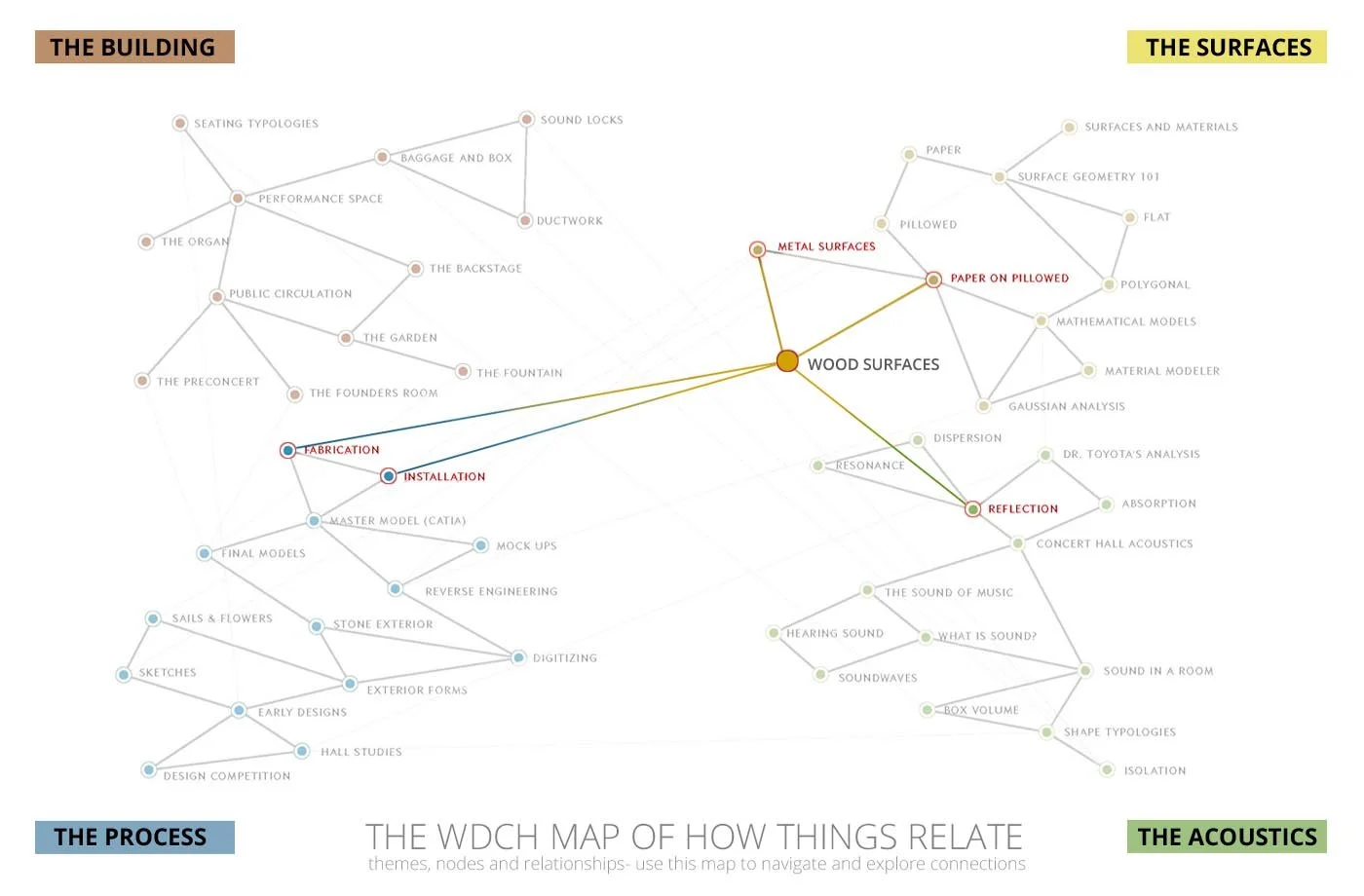
A topic map allowed viewers to visualize relationships and connections between disciplines and offered parallel navigation through the content.
Why It Mattered
Confluences helped articulate Gehry’s design methodology at a moment when digital tools were fundamentally reshaping architectural practice.
The project became an educational resource used by concert hall docents to orient visitors prior to physical tours, deepening public understanding of the building beyond its iconic form. More broadly, it demonstrated how complex technical systems could be made legible through thoughtful interaction design.
The navigation-in-context model developed here influenced subsequent work across architecture, software, and systems-based communication.
Role
Creative Direction
Concept Development & Ideation
Project Research
System Design
UX / Interaction Model
Project Leadership
-
![page 1]()
01
-
![page 2]()
02
-
![page 3]()
03
-
![page 4]()
04
-
![page 5]()
05